

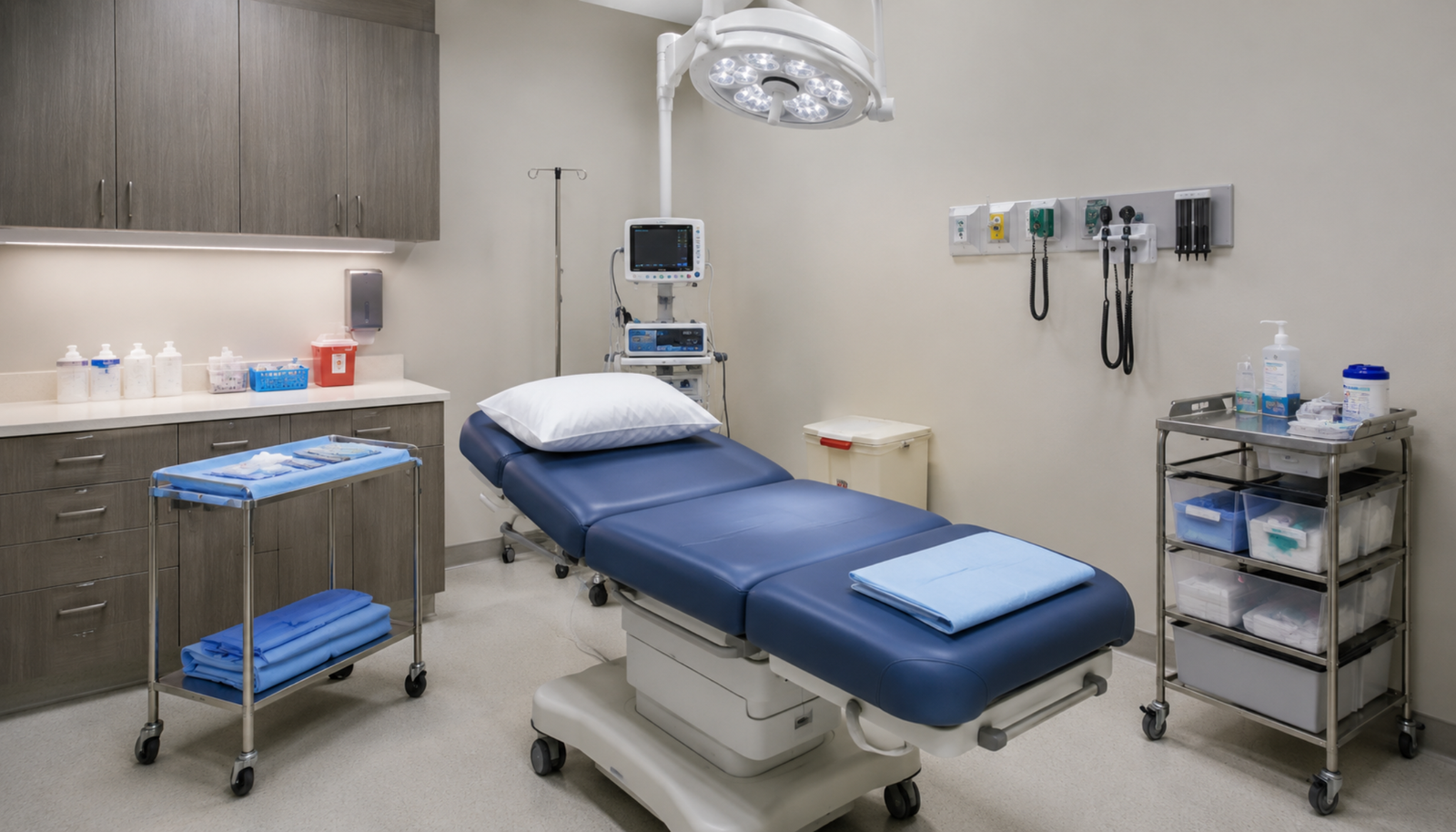
Minor Procedure Room
Not every medical procedure requires an operating theatre or a prolonged hospital stay. Many carefully selected interventions can be performed safely in a dedicated Minor Procedure Room, provided the patient is appropriately assessed and the procedure is carried out under suitable clinical supervision.
At Liver Mitra, the Minor Procedure Room is designed to support such procedures in a controlled and patient-focused environment. It provides a practical bridge between routine consultation and more complex hospital-based interventions, allowing eligible patients to receive appropriate procedural care without unnecessary hospitalization.
The philosophy is straightforward: the smaller the procedure, the greater the importance of getting the details right.
A Dedicated Environment for Minor Procedures
A minor procedure may be brief, but it still requires careful planning. Patient assessment, infection-control measures, appropriate equipment, sterile technique where indicated, monitoring, and post-procedure instructions all contribute to safe care.
The Liver Mitra Minor Procedure Room is intended for selected procedures based on the patient's medical condition, clinical requirements, and the treating doctor's assessment.
Before any procedure, the healthcare team reviews the patient's medical history, current medications, allergies, relevant investigations, and other factors that may influence procedural safety.
This preparation helps ensure that the procedure is appropriate and that potential risks are considered beforehand.
Supporting Liver and Gastrointestinal Care
Patients with liver and gastrointestinal conditions may occasionally require minor interventions as part of diagnosis, treatment, or symptom management.
Depending on the clinical situation and available facilities, selected procedures may include minor wound or skin-related procedures, drainage or other limited interventions, dressing-related care, or procedures requiring brief clinical observation.
The exact procedure offered depends on the patient's needs and the clinical judgment of the treating healthcare professional. More complex or higher-risk interventions may require a fully equipped hospital or operating-room environment.
Safety Begins Before the Procedure
A safe procedure begins with appropriate patient selection.
Before proceeding, the healthcare team may assess vital signs, medical history, medications, allergies, relevant laboratory findings, and any specific risk factors. Patients may also receive instructions regarding fasting, medication use, transportation, or post-procedure care when applicable.
Certain medications, particularly those affecting blood clotting, may require special consideration before selected procedures. Patients should always inform the medical team about all prescription medicines, over-the-counter drugs, and supplements they are taking.
No medication should be stopped or changed without medical advice.
Hygiene and Infection Control
Infection prevention is a fundamental part of procedural healthcare.
A dedicated minor procedure environment supports organized preparation, appropriate cleaning, hand hygiene, protective equipment, and sterile or aseptic techniques when required for the specific procedure.
Equipment and instruments are handled according to applicable clinical and infection-control practices. These measures help reduce the risk of procedure-related infection and create a safer environment for patients and healthcare professionals.
Precision with a Patient-Centred Approach
Even a short procedure can make patients nervous. Questions about discomfort, recovery, complications, and what happens afterward are completely natural.
Liver Mitra focuses on clear communication throughout the procedure journey. Patients can be informed about the purpose of the procedure, what they may experience, expected recovery, and warning signs that require medical attention.
This approach helps replace uncertainty with understanding.
Appropriate Monitoring During and After Procedures
Depending on the type of procedure and the patient's condition, appropriate monitoring may be performed during and after the intervention.
Some patients may be able to return home after a brief recovery period, while others may require additional observation. The decision depends on the procedure, clinical findings, symptoms, and overall patient stability.
If the healthcare team identifies a need for additional evaluation or a higher level of care, appropriate referral or hospital admission may be recommended.
When a Minor Procedure Room Is the Right Choice
A Minor Procedure Room is generally appropriate only when the procedure and patient's condition fall within the safety requirements of the facility and treating team.
It may be suitable for selected interventions that:
- Do not require major surgery
- Can be performed under appropriate local or limited anesthesia when clinically indicated
- Require limited procedural time
- Do not typically require prolonged inpatient recovery
- Can be safely managed with available monitoring and equipment
Patients requiring major surgery, advanced anesthesia, intensive monitoring, or complex emergency intervention should be treated in an appropriately equipped hospital setting.
Post-Procedure Care and Follow-Up
Care does not end when the procedure is completed.
Patients may receive instructions regarding wound care, medication, diet, physical activity, dressing changes, hygiene, and follow-up appointments depending on the intervention performed.
They may also be advised about symptoms that should prompt immediate medical attention, such as significant bleeding, increasing pain, fever, swelling, breathing difficulty, or other unexpected changes.
Follow-up allows the healthcare team to assess recovery and address any concerns early.
Connecting Consultation, Procedure, and Recovery
One of the key advantages of a dedicated Minor Procedure Room is its ability to connect different stages of care. A patient can be evaluated during consultation, appropriately prepared for a selected procedure, receive the intervention in a controlled environment, and then continue with follow-up care.
This integrated approach can make healthcare more efficient while maintaining appropriate attention to safety.
Focused Procedures. Thoughtful Care.
The Liver Mitra Minor Procedure Room is designed around an important principle: convenience should never come at the expense of clinical safety.
Through appropriate patient assessment, infection-control practices, dedicated procedural space, careful monitoring, and clear aftercare guidance, the facility supports selected minor interventions within a coordinated healthcare environment.
For patients who need a procedure but may not require major surgery or prolonged hospitalization, the Minor Procedure Room can provide a practical pathway to focused, efficient, and compassionate care.
At Liver Mitra, even the smallest procedure receives the attention it deserves—because precision, preparation, and patient safety are never minor matters.