

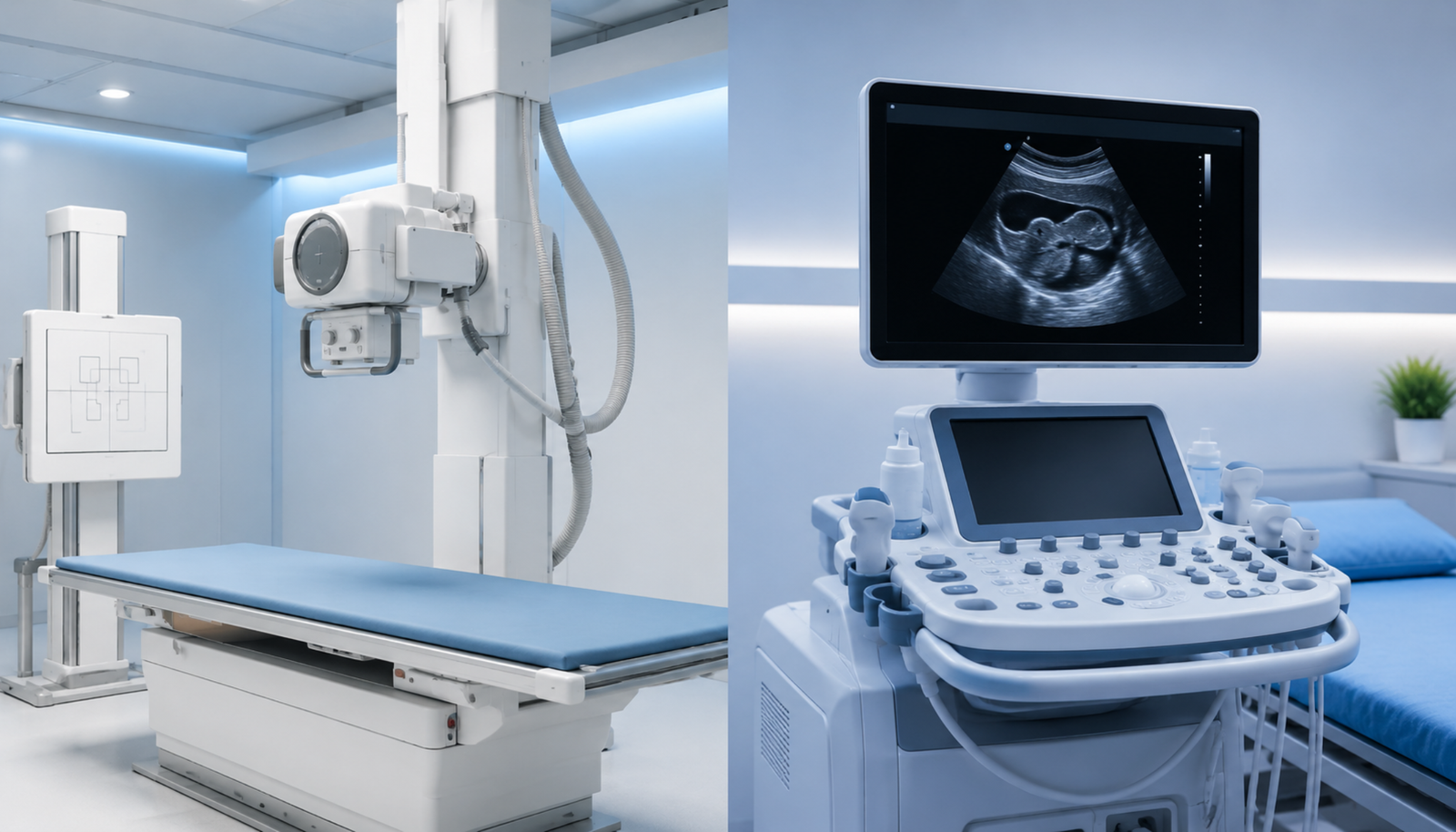
X-Ray & Ultrasound Services
A symptom can tell a patient that something is wrong, but medical imaging can help doctors understand where the problem may be and what could be causing it. For liver and gastrointestinal conditions, imaging often plays an important role in connecting a patient's symptoms with the underlying clinical picture.
At Liver Mitra, X-Ray & Ultrasound Services support the diagnosis, evaluation, and monitoring of selected abdominal, liver, gastrointestinal, and related conditions. By providing convenient access to essential imaging, the facility helps streamline the journey from consultation to investigation and treatment planning.
The approach is simple: the right imaging at the right time can provide valuable clinical insight.
Ultrasound for Liver and Abdominal Evaluation
Ultrasound is widely used for evaluating abdominal organs and is often an important first-line imaging investigation for patients with liver-related concerns.
An abdominal ultrasound can help clinicians assess the liver and other structures, depending on the examination requested. It may provide information about liver size, appearance, gallbladder, bile ducts, and other abdominal organs.
Doctors may recommend ultrasound when evaluating concerns such as:
- Fatty liver
- Jaundice
- Abdominal discomfort or pain
- Gallstones
- Bile duct abnormalities
- Changes in liver appearance
- Certain liver cysts or focal abnormalities
- Abdominal swelling
- Unexplained changes in liver-related investigations
- Follow-up of selected known conditions
Ultrasound findings are considered alongside symptoms, laboratory reports, medical history, and physical examination. The scan itself is an important diagnostic tool, but the complete clinical context remains essential.
Supporting the Evaluation of Liver Disease
Many liver conditions can develop gradually, and some patients may not experience obvious symptoms during the early stages. Imaging can therefore provide useful information when laboratory results or clinical findings indicate that further evaluation may be appropriate.
For patients with known liver disease, ultrasound may also be used as part of ongoing monitoring. Depending on the patient's diagnosis and clinical risk, the treating doctor may recommend periodic imaging or additional investigations.
If an ultrasound identifies an area requiring closer evaluation, the doctor may recommend further imaging such as CT or MRI, depending on the clinical situation.
Ultrasound and Biliary Health
The liver, gallbladder, and bile ducts work closely together. Problems affecting one part of this system can sometimes produce symptoms elsewhere.
Ultrasound can be useful in evaluating selected gallbladder and biliary concerns, including gallstones, gallbladder abnormalities, and changes involving the bile ducts.
Symptoms such as upper abdominal pain, nausea, vomiting, jaundice, or digestive discomfort may require medical assessment and, where appropriate, imaging.
The goal is not to perform unnecessary tests but to use imaging when it can provide meaningful information for clinical decision-making.
The Role of X-Ray Imaging
X-rays use a small amount of ionizing radiation to create images of internal structures. While ultrasound is particularly useful for many abdominal and liver-related evaluations, X-ray imaging has its own important clinical applications.
Depending on the patient's symptoms, an X-ray may help evaluate certain abdominal, chest, or skeletal concerns. For example, doctors may recommend an X-ray when assessing selected respiratory symptoms, abdominal conditions, or other problems where plain radiography can provide useful information.
The appropriate imaging modality depends on the clinical question. X-rays, ultrasound, CT, MRI, and other imaging technologies each have different strengths.
Imaging Guided by Clinical Need
At Liver Mitra, imaging is approached as part of the patient's overall medical evaluation rather than as an isolated service.
Before recommending an investigation, doctors consider symptoms, age, medical history, previous reports, laboratory findings, and the suspected condition. This helps determine which imaging test is most appropriate.
In some cases, ultrasound may be sufficient. In others, additional imaging may be required to obtain more detailed information.
This clinically guided approach helps patients avoid unnecessary investigations while ensuring that important abnormalities are not overlooked.
Comfortable and Patient-Focused Imaging
For many patients, undergoing an imaging test can create uncertainty or anxiety, especially when they are unfamiliar with the procedure.
The imaging experience at Liver Mitra is designed to be straightforward and patient-friendly. Patients can receive appropriate instructions regarding preparation before their examination. For certain abdominal ultrasound examinations, fasting or other preparation may be advised depending on the clinical requirement.
Patients should follow the instructions provided by their healthcare team to help ensure that the examination can be performed effectively.
Imaging for Follow-Up and Treatment Planning
Imaging does not always stop after diagnosis. Follow-up scans may be recommended to monitor changes over time, assess treatment response, or evaluate a known condition.
For patients with chronic liver or abdominal conditions, imaging can become one component of a broader monitoring plan that may also include laboratory testing and regular consultations.
Imaging findings may also help doctors plan further treatment or decide whether referral for an advanced procedure or specialist intervention is appropriate.
When Should You Consider Imaging?
Patients may be advised to undergo X-ray or ultrasound evaluation when they have persistent or unexplained symptoms, abnormal laboratory results, suspected abdominal or liver disease, or a known condition requiring monitoring.
However, the decision to undergo imaging should be based on professional medical assessment. Patients should discuss symptoms and previous reports with their healthcare provider before selecting an investigation.
Bringing Imaging Closer to Complete Liver Care
At Liver Mitra, X-Ray & Ultrasound Services form an important part of a connected diagnostic and treatment environment. By supporting clinical evaluation with accessible imaging, the facility helps doctors look beyond symptoms and develop a clearer understanding of each patient's condition.
From the first investigation to long-term monitoring, the purpose remains the same: use meaningful diagnostic information to support better medical decisions and more personalized care.
Because sometimes, the clearest path to better treatment begins by seeing what symptoms cannot show.